Docs / Introduction Learn
How EKOS Works
An end-to-end walk from raw files to a cited answer.
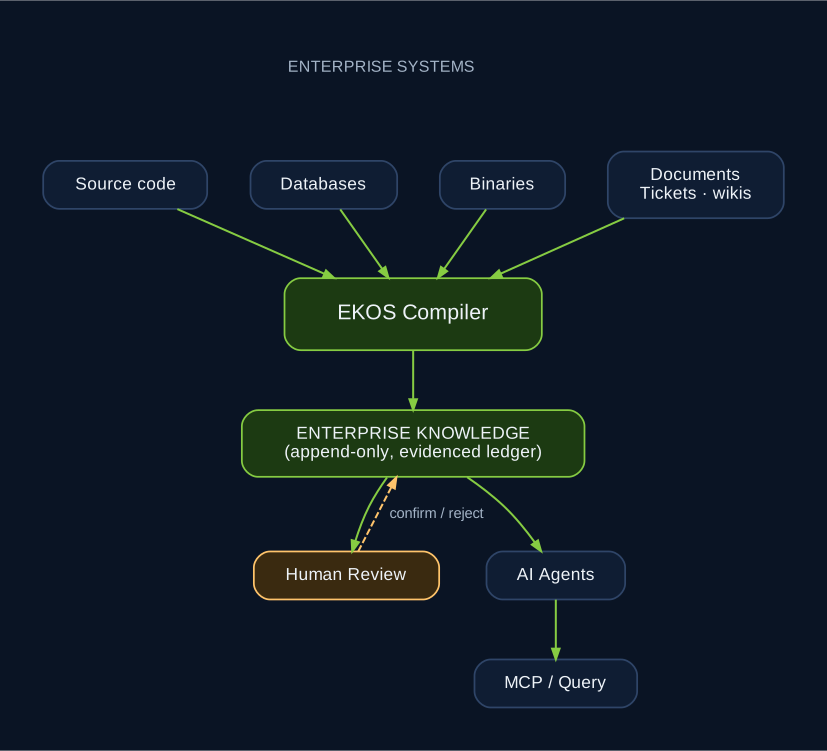
One pass through the pipeline
ekos buildwalks the paths in[observe], redacts secrets and PII, and stores content-addressable observation artifacts. It also writes aFileobject per observed file.ekos recoverruns one analyzer per source kind — SQL DDL, Rust/Python/JavaScript/Elixir/Perl ASTs, Git history, GitHub issues, Confluence pages, documents, dbt projects, Pentaho jobs, crate topology — and emits typed KIR (Knowledge Intermediate Representation) objects, relationships and evidence.ekos resolvemerges duplicates. Exact-name duplicates from the same source kind merge; fuzzy matches become reviewableunconfirmedSameAsrelationships instead of silent merges.ekos compileturns resolved KIR into the Canonical Knowledge Model (CKM), including derived objects such as concentration risks.ekos commitappends the CKM to the ledger, then builds search indexes, subsystem rollups, and (if enabled) LLM descriptions and embeddings.- Query.
ekos mcp serveexposes the ledger read-only to agents;ekos ask,ekos queryandekos ekldo the same from a terminal.
Details for each stage: Compilation Pipeline.